Tuesday, March 12, 2013

March 12, 1972: Bill Russell Day in Boston


On March 12, 1972, the Boston Celtics held "Bill Russell Day" at the Boston Garden, they honored him by retiring his #6 in a ceremony before his team took on and beat the New York Knicks 112-109. Russell spent his entire 13 year career with the Celtics and was a key component of one of the greatest dynasties in the history of the NBA. He was named the MVP of the league 5 times, selected as an all star 12 times, and won the NBA Championship Title an astounding 11 times before he retired following the '68-'69 season.

Russell was born in Louisiana, his family moved to Oakland, California during his youth and it was there he took up the sport that made him famous. He wasn't the typical superstar athlete in high school, in fact he struggled a bit and was nearly cut from his team several times. The coach of his high school team saw that he had the ability to play the sport and encouraged him to work on his fundamentals so he could reach his true potential. Russell listened to the coach and by the time he finished high school his hard work paid off enough to earn him a scholarship to the University of San Francisco. Great things were on the way for this kid.

Russell had grown to a towering 6' 9" and he became a dominant player on the court, teamed up with guard K.C. Jones they led the Dons to consecutive NCAA Championships in 1955 and 1956. He had averaged 20.7 points and 20.3 rebounds in his 3 years at USF. With the NBA Draft on the horizon in 1956, the Celtics general manager and coach Red Auerbach was hoping to figure out a way to land Russell on his squad, it wasn't going to be easy since the Celtics didn't pick until late in the first round. Auerbach started thinking trade and he knew that the Rochester Royals held the first pick and would not pay the money that Russell would demand so the next team on the list was the St. Louis Hawks. The owner of the Hawks, Bob Kerner was open to the possibility of a deal if he could land St. Louis native and former Saint Louis University star Ed Macauley. The deal almost hit a snag when Kerner decided he wanted a little bit more, the Celtics had to send Cliff Hagan to complete the transaction that brought Russell to Boston. The deal brought St. Louis a Championship in 1958 and it brought Boston a dynasty that lasted more than a decade.

After winning a gold medal in the 1956 Olympics Russell joined his new team. He played in 48 games, putting up a 14.7 points per game average while leading the league with a 19.6 rebounds per game average. Russell's rookie season ended with a title as the Celtics beat the St. Louis Hawks in 7 games. Russell went down in the third game of the 1958 Finals and his playoff run ended early, the Hawks took home the title after 6 games. It was merely a hiccup for Russell and the Celtics. They won the title for the next 8 consecutive years with Russell leading the charge. They were denied their ninth consecutive championship by the Philadelphia 76ers in 1967, but they came right back and won the title in 1968 and 1969.  The 1969 Finals went to a 7 games and Russel contributed with 21 rebounds in what would be his final game as a professional basketball player. He would surprise everyone by announcing his retirement following the season. The fans and media alike felt betrayed, Russell who was only 35 years old had not only left the team without a center they were also in need of a coach, he had taken on the role of player/coach during the '65-'66 season after Auerbach retired from coaching. Auerbach remained with the organization as GM and he was so blindsided by Russell's retirement that he didn't even draft a center. The first season the team was without their star center they missed the playoffs for the first time since 1950.

When Russell left the game he left on his own terms and they were terms the fans and media had to accept. Time heals all wounds and just a couple of seasons after he made his choice the organization honored him by raising his #6 to the rafters in Boston. Russell was one of the best defensive minded centers to ever play the game, he scored more than 14,000 points in his career and he was a rebounding machine that had more than 20,000 rebounds on his resume. Bill Russell will forever be a legend in Boston and he will also be remembered forever in the history of basketball, he was inducted into the Naismith Basketball Hall of Fame in 1975.

Bill Russell's retirement letter which was published in Sports Illustrated in 1969:
http://www.insidehoops.com/forum/showthread.php?t=166170

Bill Russell's stats:
http://www.basketball-reference.com/players/r/russebi01.html

Monday, March 11, 2013

March 11, 1979: Randy Holt of the L.A. Kings is penalized 67 minutes in a 60 minute game

On March 11, 1979, Los Angeles Kings defenseman Randy Holt, was assessed 67 penalty minutes in a 60 minute game. It was a record setting night for Holt as he shattered the previous record of 52 penalty minutes in a game, set by Jim Dorey in 1968. Holt's record still stands today and there is a good possibility it will never be broken. The craziest thing is it all went down in the first period of play.

Holt's career started in the Chicago Blackhawks organization, most of his time with their organization was spent with their top minor league affiliate the Dallas Blackhawks. While he was in the minors Holt established himself as one of the toughest men around. Holt spent a little more than 3 seasons with the Blackhawks organization before he was dealt to the Cleveland Barons in November of 1977. The Barons lacked depth and it gave Holt an opportunity to stick around at the NHL level. It was the first time he played more than 12 games at the top level, in fact he played in 48 games for the Cleveland team. Holt only scored 5 points that season, he also recorded 249 penalty minutes which was the fourth most in the NHL during the '77-'78 season. The Barons organization folded following that season and Holt was claimed by the Vancouver Canucks in a dispersal draft. His time in Vancouver was short, he played just 22 games in a Canucks uniform before he was traded to Los Angeles. In that short time with Vancouver, Holt had spent 80 minutes in the sin bin. Changing uniforms didn't change where he spent his time, he finished that season with career high 282 minutes in the box and 67 of those minutes came in one game.

The night Randy Holt put his name in the record books the Kings took on the Flyers in Philly. Holt picked up his first minor early in the contest, then at the 14:58 mark he dropped the gloves and fought Philadelphia enforcer Frank Bathe, Holt was sent to the box with a 5 minute major for fighting and a game misconduct. With the game barely underway Holt had 22 penalty minutes under his belt, and there was a lot more on the way. At the end of the first period Holt decided to settle a score with Philadelphia center Ken Linseman, he thought Linseman had gotten a cheap shot on him earlier in the game and he wasn't going to let it slide. The result was a huge bench clearing brawl with fists flying from every angle. With the refs dealing with one group of men throwing down Holt squared off with Philadelphia right winger Paul Holmgren, it was epic. They pummeled each other by tossing haymakers and landing shot after shot to the other guy's face. The fight continued for a few more minutes all around him. The best way to truly comprehend what went down is to see it with your own eyes; http://www.youtube.com/watch?v=-hMesmZTSz8. When ordered was restored Holt was assessed 45 more minutes in penalties which included a triple game misconduct. he was now the owner of one of the most infamous records in hockey and he was also not very well liked in the City of Brotherly Love. The Flyers went onto win the game by the score of 6-3.

Holt spent another season in Los Angeles before being traded to the Calgary Flames in 1980, he had his best year in Calgary as far as playoff success goes. He helped the Flames reach the Semi Finals before they were knocked out by the Minnesota North Stars. Following that season he was dealt to the Washington Capitals. He continued to drop the gloves and was a regular resident of the penalty box, in his second year in Washington he led the entire league with 275 penalty minutes during the '82-'83 campaign. Holt's career came to a close in the '83-'84 season after a short stint with the team that he had faced off against just a few years before, he spent 26 games with the Flyers before he hung up the skates for good.

Holt played in 395 games in his NHL career, he scored just 4 goals and recorded a grand total of 41 points at the top level, he also was sentenced to 1,438 minutes in the sin bin. He wasn't known for his playmaking ability or his ability to score a flashy goal, he was known for letting his gloves hit the ice and taking care of business with his fists. With the numbers Holt put up and his lack of playoff success there is a good chance that his name would fall to the wayside when it comes to the history of hockey, that crazy night in Philadelphia made sure that his name would not be forgotten

Randy Holt's career stats:
http://www.hockey-reference.com/players/h/holtra01.html

Sunday, March 10, 2013

March 10, 1951: J. Edgar Hoover turns down the opportunity to become the commissioner of Major League Baseball

On March 10, 1951, the head of the FBI, J. Edgar Hoover turned down a $65,000 a year offer to become the third commissioner of Major League Baseball. Hoover served as the nation's top cop from 1924 to 1972 and he came very close to being the man that led all of baseball.

The commissioner job opened up early in 1951 after the owners decided that they would not renew Happy Chandler's contract. Chandler had held the post since 1945, he fell out of favor with the owners by becoming known as the "players commissioner", Chandler helped establish a pension fund for the players and he also helped integrate the game. While his tenure was a short one he made an indelible mark in the history of baseball and he is recognized in the Baseball Hall of Fame because of his contributions.

Hoover was considered to be the leading candidate for the commissioner's post after he had given a speech in 1945 that talked about the importance of baseball during wartime. Hoover had always been a fan of the game, he even went as far as sending Reds pitcher Johnny Vander Meer a letter to congratulate him after he had tossed back to back no hitters in 1938. The owners looked at Hoover as a natural fit for the job, but they just couldn't lure him away from the FBI.

It wasn't anything new for the owners to look toward a prominent public figure to lead the way. The first two commissioners had political backgrounds, Kenesaw Mountain Landis was a federal judge before he took the job and Happy Chandler had served as a Senator and as the Governor of Kentucky. When Hoover turned down the position the owners went in a different direction by hiring Ford C. Frick, he was a former sportswriter who had served as President of the National League since 1934.  Frick was the commissioner of baseball from 1951 to 1965, he was also inducted into the Baseball Hall of Fame for his contributions to the sport.

If Hoover would have made a different decision it would have not only changed the history of sports it would have changed the history of the United States of America. It is a pretty interesting thing to think about.

Saturday, March 9, 2013

March 9, 1958: George Yardley becomes the first player in NBA history to score 2,000 points in a season

On March 9, 1958, on the last day of the regular season, Detroit Pistons forward George Yardley became the first player in the history of the NBA to score 2,000 points in one season. Unfortunately for Yardley the milestone came in a 111-90 loss against to Syracuse Nationals. His 26 point effort put him at 2,001 points on the year. Yardley was recognized for his contributions to the game in 1996 when he was enshrined into the Naismith Basketball Hall of Fame.

The 6 time all star played just 7 years in the NBA. He was known for his offensive mind. The 1958 season was by far the pinnacle for Yardley as he averaged 27.8 points per game on the way to the scoring 2,001 points. He also set records for free throw attempts with 808 and free throws made with 655 in that 1958 season. Yardley came very close to not playing professional basketball after he graduating from Stanford with a degree in engineering. It was a different world; million dollar contracts did not exist and he could make more money using his education rather than play a sport he loved.

Born in Hollywood, California in 1928, Yardley had athletic ability in his blood. His father was a star at the University of Chicago in baseball, football, and basketball. When he was a kid, Yardley was on a tennis court much more than the basketball court. It wasn't until his high school years that he took up organized ball. After he graduated he didn't have colleges knocking on his door to recruit him, but he had the brains to get into Stanford with his academic ability. He made the Stanford basketball squad during his sophomore season, and became a force to be reckoned with. During his senior year George led the team with 237 of their 423 points scored on the season. Following his graduation from college he spent two years in the United States Navy, and continued to play basketball in the Amateur Athletic Union. In 1950, Yardley was drafted with the 7th overall pick by the Fort Wayne Pistons. He had been dominate as an amateur and the Pistons believed he could carry his success over to the pros. Now he would have to deal with the issues of being a professional ballplayer.

A big issue for Yardley was the Pistons were a part of the the newly formed National Basketball League, which would transform into the NBA.The team could not pay him enough to move east. He continued to play in the Ameteur Athletinc Union where he led his team to the AAU title in 1951. Yardley took  home MVP award during that tournament. Meanwhile, Pistons owner Fred Zollner kept trying to sign Yardley only to be rejected. The man with a degree in civil engineering could simply make more money in his field and continue to play the sport closer to home. Finally, in 1953 Zollner made an offer that Yardey couldn't refuse. He signed a contract that had a base salary of $9,500 per season with a $1,500 signing bonus. The salary was more than double the average NBA salary. Zollner finally got his man.


His first year in the NBA wasn't his most memorable, as he averaged just 9 points per game. He had a hard time cracking the starting lineup of a team that had a variety of stars around him. His playing time picked up significantly when his teammate Jack Molinas was suspended for placing a bet on a Pistons game. Yardley made his mark that season and the best was yet to come. The NBA was brutal during his first year in the league, the players were fouled violently. Yardley would later say "They didn't just push you around they hit you with a clenched fist in the face" he went onto say "The weak didn't make it". His second year in the league the shot clock was introduced and it changed the game forever. It went from a game that was dominated by the big man that could run you over, to a game that was dominated by those who possessed the greatest athletic abilities. This led to great things for Yardley. The emergence of the shot clock not only helped Yardley's game, it changed the league altogether. It enhanced the value of players who create their own shot and the value of the guys who could get open looks for their teammates. Yardley was one of those guys who could get open,  and when he did  he could score at will. He was quick on his feet and could put points on the board in a number of ways. He had mastered the turnaround jumper in his years before he joining the NBA and that shot alone might have made him famous.

Yardley and the Pistons went the NBA Finals twice before the team moved to Detroit in 1957. It was the inaugural season in Detroit that he made history. He played in The Motor City until he was traded to the Syracuse Nationals in February of 1959. He played just 15 games with the Nationals that season then one full season with them before retiring. In his career, Yardley averaged 19.2 points per game and was one of the most consistent scorers in the league. His record stood for only one season before Bob Pettit surpassed it with a 2,105 point campaign. While it is a milestone that was quickly surpassed only one man can be the first to reach the mark and that man is named George Yardley.

Check out George Yardley's career stats here:
http://www.basketball-reference.com/players/y/yardlge01.html

Here's a look at some Single Season point milestones:
http://www.nba.com/statistics/pointmilestones_080307.html

Friday, March 8, 2013

March 8, 1941: Hugh Mulcahy becomes the first MLB player to be drafted during WWII

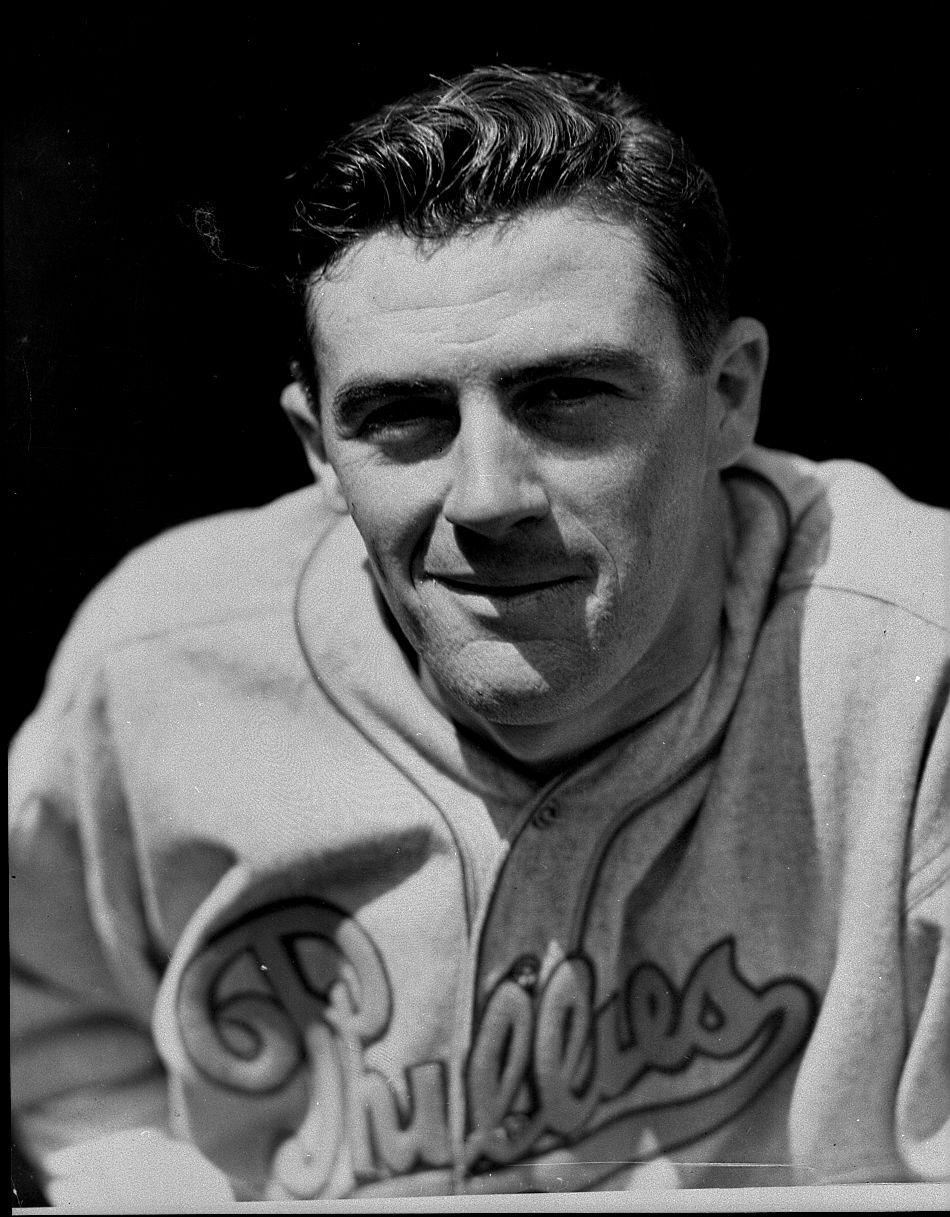
On March 8, 1941, Hugh "Losing Pitcher" Mulcahy of the Philadelphia Phillies became the first major league baseball player to be drafted during World War II. This came nine months before the bombing Pearl Harbor. He had earned his nickname by losing 76 games between 1937 and 1940. While the back of his baseball card had some numbers in the wrong column, he is a war hero who deserves to be remembered.

Mulcahy was born and raised in Massachusetts. While he was growing up he primarily played shortstop. After graduating high school he attended and played ball at the Dean Academy in Franklin, Massachusetts. He only spent a year in school before turning to a semipro league called the Boston Twilight League. It was there where he took up pitching. After posting an 8-12 record in that league he signed a minor league deal with the New York Giants. Fromt here he bounced around for a number of years before landing with the Phillies organization. The Phillies were managed by Jimmie Wilson. He was told Mulcahy could pitch but he needed to work on his mechanics. The team was starved for pitching so he gave him a shot. The manager helped straighten out some mechanics and it looked like he might be able to pitch for the big club. He made his major league debut in 1935 at Forbes Field in Pittsburgh. He came in late in the game had sat down three batters in a row. Those three batters were Lloyd Waner, his brother Paul Waner, and Arky Vaughn. All three of those men were future Hall of Famers.

Within a couple of seasons Mulcahy had found himself a permanent spot on the major league staff. His record might not have shown it but he was a workhorse. In 1937, he made 56 appearances and pitched more than 200 innings in relief and as a starter. His record was 8-18 that season and it was the beginning of a rough stretch that earned him the nickname that could have gone to any other pitcher on the staff. They simply weren't a good team. In his second full year in the majors Mulcahy appeared in 46 games, he started 34 of those games and posted a 10-20 record, it was that season that a writer tagged him as "Losing Pitcher" Mulcahy. The name stuck when he posted a 9-16 record in 1939 then a 13-22 record in 1940. When it came to his teammates and his manager they had nothing but respect for him because they knew he gave 100% effort and laid it all on the line each and every time he took the mound.  In 1940, he was selected to the all star game. His 13-22 record was very deceiving that season. By the time the season had ended he had completed 21 games which was the third most in the league, he pitched a career high 280 innings which was fourth in the league and his 3.60 average was well below league average. There is a good chance he would have been much more successful if he was with the right club as the team around him only hit .238 that season before he was called into war.

Mulcahy had just signed a lucrative deal with the Phillies following that 1940 season, then came the call into the service. He jokingly told the Sporting News that his losing streak was over and that he was on a winner now. When he was first drafted it only looked like he would have to serve a year before reaching the age of 28 which was cutoff age for drafting men. Ten months after he was was inducted into the Army he was discharged. Just two days after his discharge everything changed with the bombing of Pearl Harbor. His service would be needed once again.  By the time he was discharged again it was 1945 and he had missed 5 full seasons in the prime of his career.

Mulcahy always looked at things through a positive lens. He never did look at life like he had been dealt a bad hand. He felt fortunate to have made it to the major leagues, and also felt fortunate to have survived the war. When he returned from the war he was passed his prime. His best years were spent playing ball in the service. In 1943, nobody called him Losing Pitcher Mulcahy as he led his team with a 15-1 record on the way to winning the Southern Army Baseball Championship. The different ballplayers getting together to play ball was not only fun for the players involved it also helped keep up morale. It was not all fun and games for Mulcahy because in the end he was a soldier. He earned a bronze star and several other accolades before his days in the service came to an end.

In August of 1945 Mulcahy rejoined the Phillies. Not much had changed as the team would almost throw games away with defensive lapses. After only 16 appearances in 1946 he asked for and was granted his release by the team. He inked a deal to play with the Pittsburgh Pirates the following season but didn't make it through Spring training. He played a little bit of semi pro ball then finally hanging up his cleats in 1951. After he decided to step away from the game as a player he was hired by the Chicago White Sox to help young pitchers develop. He had done his fair share of helping his teammates throughout his career so this was a natural fit. He ran the White Sox training camp for many years and was even named the pitching coach for their major league club in 1970. In 1974, Mulcahy was recognized as the White Sox Man of the Year because of his work with pitchers as they were coming up within the organization. He retired after more than 20 years with the White Sox. He lived a quiet life, playing golf and enjoying his grandchildren until he passed away in 2001. The man lived with no regret, he appreciated his life and I really do think it makes his story a great one. I know I look at him as a war hero and that losing pitcher nickname means nothing.

Thursday, March 7, 2013

March 7, 1979: Cooperstown Calls Hack Wilson's Name

On March 7, 1979, Hack Wilson was selected by a Special Veteran's Committee to join the ranks of the most famous men in the history of baseball in Cooperstown, New York. His power rivaled the great Babe Ruth and he put together one of the best seasons in the history of baseball as a member of the Chicago Cubs in 1930 when he hit 56 home runs and knocked in 191 runs. His 56 home runs stood as a National League record for 68 years and no player has yet to surpass his 191 ribbies in a single season.

Wilson was born in a small steel town just north of Pittsburgh, Pennsylvania in 1900. In 1916, he quit school and took a job at a locomotive factory swinging a sledge hammer for $4.00 a week. That job helped him build up enormous strength and would help him crush the baseball when he took the field. At 5' 6", Wilson was short in stature, however, he was barrel chested and displayed raw power. While some thought he was too short to play the game of baseball he did work his way onto a minor league roster in 1921. He knocked the cover off the ball in the minors, but executives around the league still thought he was too short to play in the majors. One man thought he could make. That man was New York Giants manager John McGraw. After a cup of coffee with the Giants in 1923, Wilson earned himself a full time spot on the roster the following season. A storied career was about to begin.

Wilson hit .295 in his rookie campaign with 10 home runs. He did not enjoy the same success in 1924. He hit just .239 in 62 games before being sent to the minors. At the end of the '25 season he was left unprotected by the Giants and the Chicago Cubs grabbed him off the waiver wire. They had landed a player that would become one of the most feared hitters in all of baseball.

His years in Chicago earned him the plaque in Cooperstown. Wilson led the league in homers 4 times from 1926 to 1930. In each of those years he topped the .300 mark as well. He also led the league in RBI's in 1929 as he helped get the Cubs to World Series where they lost to the Philadelphia A's. Wilson dropped a ball in the fourth game of that series that would haunt him even after he retired. The error led to a comeback for the A's and was a huge momentum shift for the team from Philly. He followed that season up with the remarkable 56 homers and 191 rbi performance of 1930. A season that should never be forgotten.

In his heyday, Wilson was by far one of the best hitters to ever pick up a bat. Unfortunately, he was an alcoholic and the way he lived eventually caught up with him. He was always known for his temper just as well as his the way he played. In June of 1928, the Cubs were playing the St. Louis Cardinals, Wilson got tired of a heckling fan and jumped in the stands and went after the heckler. The result was a near riot that had more than 5,000 people pour on the field before the police got it under control.The next season he had a run in with Cincinnati Reds pitcher Ray Kolp. Ye incident happened after Wilson picked up a single off the pitcher. He was on his way to first base when the pitcher said something that pissed him off enough to charge the mound and proceed to kick his ass. Later that evening he ran into another Reds player in a train station where there was a heated exchange before fists flew again. Wilson even signed a contract to box Chicago White Sox first baseman Art Shires. The fight never took place because Shires had been defeated in a bout against one of the members of the Chicago Bears. Wilson didn't see the point of fighting a man who had been defeated. He was probably one of those guys you loved to have on your team but couldn't stand to look at when you saw him in the batters box when you were on the other side. Drinking was the downfall of the man who could hit with the best of them, he was in the same category as Babe Ruth, Ty Cobb, Lou Gehrig and any other great player of his era.

The 1931 season proved to be his last in a Chicago Cubs uniform. His numbers plummeted and his on and off field altercations led to him falling out of favor with the owner of the club Bill Wrigley Junior. He was traded to the St. Louis Cardinals in December of 1931. A little over a month later the Cardinals traded him to the Brooklyn Dodgers. He had one solid year in Brooklyn, hitting .297 with 23 homers and 123 ribbies in 1932. From there his numbers went into a decline and by the middle of the 1934 season he was released by the Dodgers. The Philadelphia Phillies signed him as soon as he was released by Brooklyn. After just 20 at bats with the Phillies the team released him. His major league career came to a close at the age of 34.

After he left the game of baseball, Wilson held several jobs: everything from bartender to a laborer for the City of Baltimore. The way he drank and lived kept him from landing a job in Major League Baseball and this once great hitter had become just a guy with a drinking problem. Wilson passed away in October of 1948, after a fall in his home led to internal hemorrhaging. He was 48 years old. Hack Wilson died penniless, his son would not even claim his remains. His funeral was paid for by bar patrons who passed around a hat and the suit he was buried in had to be donated. It was a very sad end for a man led a short but remarkable career.

More than 40 years after Hack Wilson left the game he was recognized in the Baseball Hall of Fame. He held a .307 career average and 244 home runs and had 1,063 rbi's. The recognition he had deserved for so long was more than likely delayed by the fact that his success was in a much smaller window than most players that find themselves in the Hall of Fame as well as his off field battles. He played for 12 years total in 7 of those years he was a force to be reckoned with. I can understand why he wasn't selected to the Hall sooner. On the other hand, that 1930 season alone deserves to be recognized forever so when that veteran's committee pushed his name through I truly believe they got it right.  The story of Hack Wilson is one to be admired but it is also a cautionary tale about bad decisions and addiction that led to his demise. The guy had it all, in 1931 he was the highest paid player in the National League. However, a series of bad decisions and a monkey he couldn't get off his back left him broke. I know if I get to talking about him I will choose to go with that remarkable year in 1930.

The final piece of art was done by Arthur Miller check out more of his fine work here:
http://www.artofthegame.com/

You can check out Wilson's numbers here:
http://www.baseball-reference.com/players/w/wilsoha01.shtml

Single Season RBI Leaders:
http://www.baseball-reference.com/leaders/RBI_season.shtml

Wednesday, March 6, 2013

March 6, 1968: Norm Ullman Makes His Debut In Toronto

On March 6, 1968, Norm Ullman made his debut with the Toronto Maple Leafs, just three days earlier he was sent to the team in a blockbuster deal from Detroit. The future Hall of Famer impressed the fans in Toronto as he recorded a goal and two assists in a 7-2 win over the Philadelphia Flyers.

When Ullman was 8 years old he lived close to an American military base in Edmonton, Alberta, Canada. The base had an ice rink, it was there he first took up ice skating after his father made arrangements for his kid to have a little fun. By 10 years old he had taken up the sport that would make him famous. By the age of 16, Ullman was playing with the Edmonton Oil Kings, who were sponsored by the Detroit Red Wings which meant they owned his rights. He turned pro at the age of 18, then spent a couple seasons with the Red Wings top minor league affiliate, the Edmonton Flyers. By the time he was 20 years old he was ready to take the next step and he joined the Red Wings for the 1955-'56 season.

When Ullman arrived, he joined a team that had dominated the decade by winning 4 of the last 6 Stanley Cup's. The kid was in awe to be playing with such great names like Gordie Howe, Terry Sawchuk, and a variety of other great players. In his first full season he didn't get the ice time that he would later receive, but he still recorded 9 goals with 9 assists and proved he had what it took to play at the highest level. The following year Norm scored 16 times and recorded 36 assists, he became a model of consistency over the next few years and was selected to the All Star game in the 1960 season, that was the first season he finished in the top ten in goals scored. He would crack the top ten three seasons in a row before taking the top spot in the '64-'65 season, with a 42 goal performance. That year he was just 4 points shy of the league's scoring title that went to Stan Mikita. Ullman had become everything a team could want in a player, he scored goals, could take and give a hit, and was recognized regularly by being selected to the All Star team.

When he was moved to the Toronto Maple Leafs in 1968, he was surprised by the deal. It was a massive deal as the Red Wings sent Frank Mahovlich, Garry Unger, Pete Stemkowski, and Carl Brewer to the Maple Leafs for Floyd Smith, Paul Henderson, and Ullman. The general manager and coach of the Maple Leafs, Punch Imlach considered Ullman to be the linchpin in the deal. He performed well throughout his time in Toronto, and was in the top ten in scoring twice during his 6+ seasons with the club. In his last couple years in Toronto, Ullman's ice time tapered off for reasons he couldn't understand. It led him to jumping at the chance to join the Edmonton Oilers of the World Hockey Association in 1975. He spent two seasons with Edmonton before hanging up the skates.

In his 20 year NHL career he scored 490 goals, 739 assists, for a grand total of 1,229 points. Despite his consistent play he was not able to add the Stanley Cup to his resume, but he was recognized as one of the best players to play the game when he was inducted into the Hockey Hall of Fame in 1982, Ullman called it the greatest honor of his lifetime.